
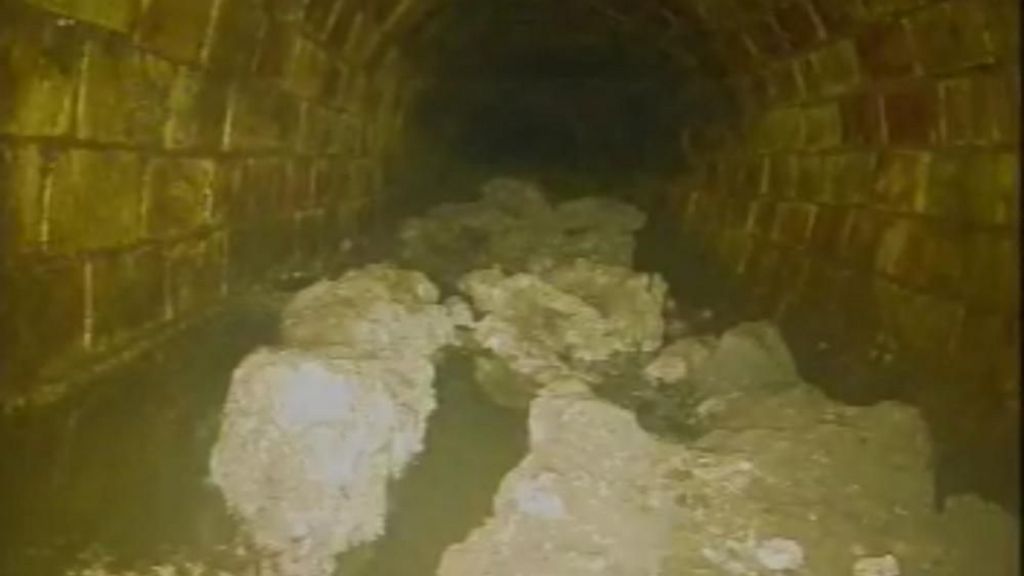
A fatberg believed to weigh about 100 tonnes has been discovered blocking the sewers of east London.
The mass of congealed fat, oil and grease has been found under Whitechapel and measures around 100m long.
Thames Water said the extraction of the blockage could take "weeks to complete" and "it serves as a stark reminder that what goes down the drain doesn't disappear".
The company is urging people to think carefully about what they pour down sinks and flush away over the festive period.
'Grandchild'
Thames Water says residents are not currently affected as the sewer remains only partially blocked.
Tim Davies, head of waste operations for north London, said: "This latest fatberg shows exactly what happens when fats, oils and wipes go down our drains – they don't disappear, they build up and cause serious damage.
"The cost of clearing blockages and repairing sewers runs into tens of millions of pounds every year, and that money ultimately comes from our customers."
The blockage has been dubbed "the grandchild" of the 2017 Whitechapel fatberg, which weighed 130 tonnes and stretched more than 250m.
That fatberg was one of the largest ever found in the city, and a sample even went on display at the Museum of London.
Thames Water, which says there are more blockages in December and January, is urging people to scrape food from plates, use sink strainers and avoid pouring liquid foods like gravy or cream down the sink.
Listen to the best of BBC Radio London on Sounds and follow BBC London on Facebook, X and Instagram. Send your story ideas to hello.bbclondon@bbc.co.uk
(Feed generated with FetchRSS)