

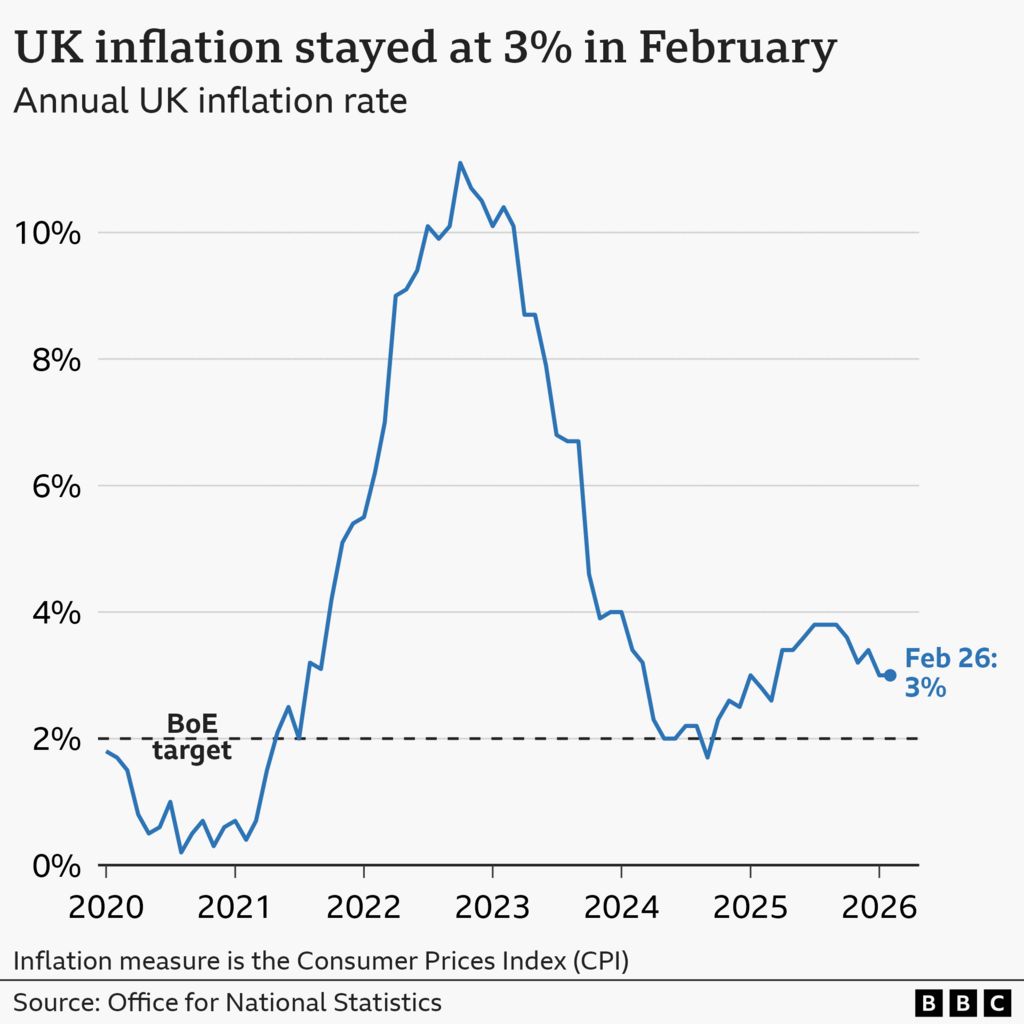
The UK inflation rate stayed at 3% in the year to February as lower fuel prices were offset by a rise in the price of clothing.
However, these official figures were gathered before the US-Israel war with Iran began – when data suggests the price of petrol was at its lowest since June 2021.
Pump prices for petrol and diesel have since soared following a surge in wholesale oil prices following the outbreak of the conflict.
This is expected to have a knock-on effect for energy prices and other things such as leisure and food costs as manufacturers and firms pass on costs, meaning that predicted falls in inflation this year are now not likely to happen.
The Office for National Statistics' (ONS) inflation figure for February, which measures the rate of price increases over a year, remained the same as it was in January after months of steady falls.
Although the inflation rate has dropped from a high of 11.1% in October 2022, prices themselves are not coming down, but simply rising at a slower pace.
Predicted fuel rises
The ONS said the average price of petrol was 131.6p per litre in February, the lowest price since June 2021. Diesel's average was 141.1p.
By Wednesday however, RAC figures showed petrol was 149.4p a litre and diesel had risen to 175.7pence - with experts predicting futher rises.
The ONS said clothing and footwear prices rose by 0.9% in the 12 months to February compared to no change in price in the 12 months to January.
Meanwhile, discounted alcohol also pushed the overall inflation figure down, the ONS said, adding that alcohol and tobacco saw their lowest recorded inflation rate since February 2022.
'Our fuel costs have increased 20% in three weeks'
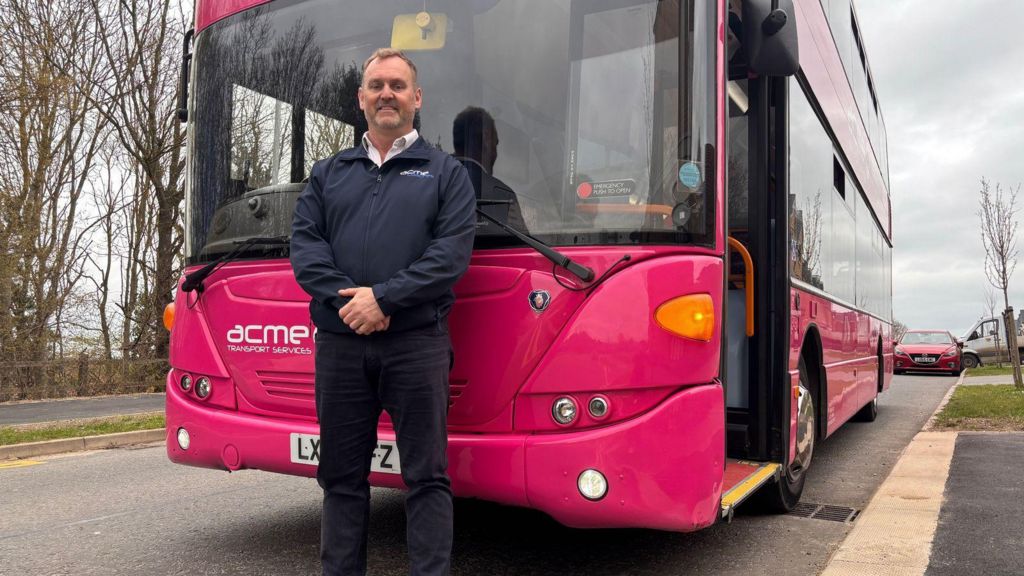
James Palmer runs the Acme Bus Company in Saffron Walden and says rising fuel prices since the start of the Iran war are already having an impact on the business.
Every day, hundreds of school children in Essex and Hertfordshire rely on his buses to get them to and from school.
"It's the unpredictability of not knowing what the price is going to be tomorrow and maybe that you're not going to be able to order fuel", he says.
Three weeks ago, the company, which buys fuel in bulk, paid around £1.21 per litre. But James says he is now paying roughly £1.86 per litre.
The forecast rise in inflation means many analysts think any chance of the Bank of England cutting interest rates this year has gone. Some are instead expecting a rate rise later in the year.
The Bank moves its benchmark rate up and down in order to keep UK inflation - the rate at which prices are increasing - at or near 2%.
When inflation is above that target, the Bank typically puts rates up. The idea is to encourage people to spend less, reducing demand for goods and services and limiting price rises.
The latest inflation figures come after data last week showed that pay has grown at its slowest rate in more than five years.
Although pay growth is outpacing price rises, that could change if the Iran war drives up inflation.
Capital Economics predicts inflation could peak at 4.6% by the end this year, based on its current working assumptions about oil and gas prices.
Chancellor Rachel Reeves said she was taking measures to bring down the cost of living, though experts say her efforts are likely to be thwarted by the war.
"We are also acting to protect people from unfair price rises if they occur, bring down food prices at the till, and cut red tape to boost long-term energy security — building a stronger, more secure economy," she said.
'It's just profiteering by the large oil companies'

Daniel Pilley owns The Gainsborough Health Club and Spa in the Suffolk countryside, which relies on heating oil to heat the pool facilities as it isn't connected to the gas network.
"We buy 500 litres of oil every single week. The price has gone from 59p per litre to £1.50 per litre in the space of two weeks," he said.
"It's just profiteering by the large oil companies and the government really need to step in and stop that quickly, because it has a direct impact on businesses like ours", he says.
The UK's official competition watchdog is investigating "concerning reports" of profiteering from heating oil providers. The industry body for heating oil has said providers are "price takers" in the market.
Additional reporting by Adam Woods
(Feed generated with FetchRSS)